

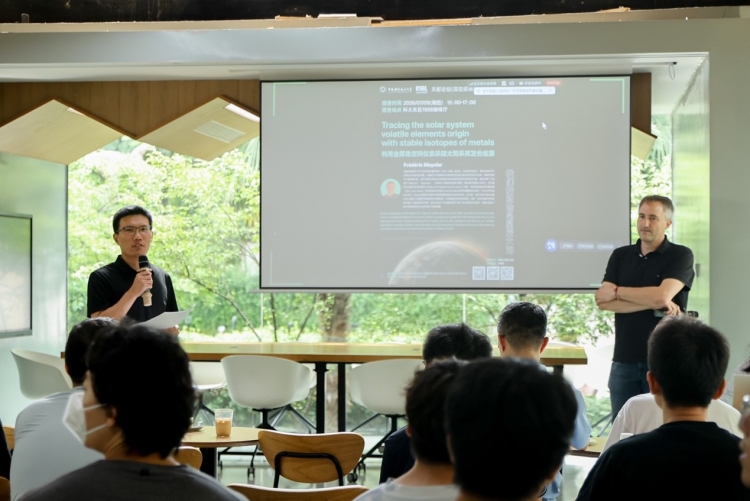
On July 9, 2026, the 47th Tiandu Forum (Deep Space Exploration Academic Salon) was successfully held at the 1958 Café on the East Campus of the University of Science and Technology of China (USTC). Centered on the cutting-edge planetary geochemistry topic of tracing the solar system volatile elements origin with stable isotopes of metals, the salon invited a world-leading scholar to share original research findings, drawing extensive attention from numerous researchers, faculty and students both on and off campus.
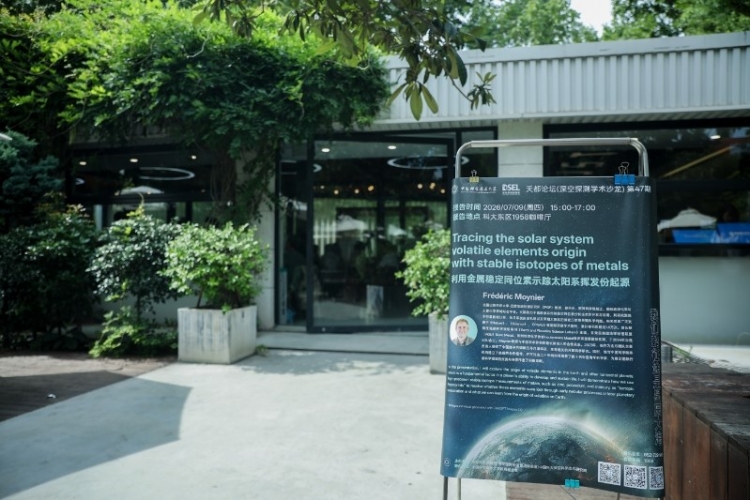
The salon featured an invited lecture delivered by Professor Frédéric Moynier from Institut de Physique du Globe de Paris (IPGP), Université Paris Cité, with the lecture titled Tracing the solar system volatile elements origin with stable isotopes of metals. Professor Frédéric Moynier serves as Professor and Deputy Director of Institut de Physique du Globe de Paris, Université Paris Cité, and Fellow of the European Academy of Sciences, being a globally renowned scholar in geochemistry and cosmochemistry. He has long dedicated himself to developing and applying high-precision non-traditional stable isotope analytical techniques. His research focuses on fundamental scientific questions including planetary core-mantle differentiation, the formation mechanism of the Earth-Moon system, and the evolutionary history of the early Solar System.
His research outputs have been widely published in top international journals, with a total citation count exceeding 18,000. He previously served as Editor-in-Chief of the top geoscience journal Earth and Planetary Science Letters, has received numerous prestigious international academic honors, and was elected an AGU Fellow in 2024.
Professor Moynier maintains long-term, in-depth academic collaborations with Chinese researchers. In 2023, as the lead principal investigator of the French research team, he received China’s Chang’E-5 lunar regolith samples and led a series of lunar research projects. Moreover, he has built stable collaborative ties with multiple institutions under the Chinese Academy of Sciences, supervised dozens of young Chinese scientists over the past two decades, and made remarkable contributions to advancing international exchange and cooperation in planetary science.
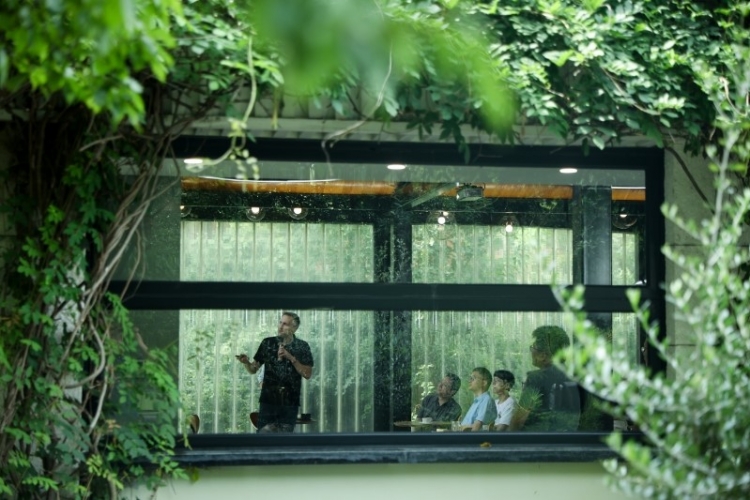
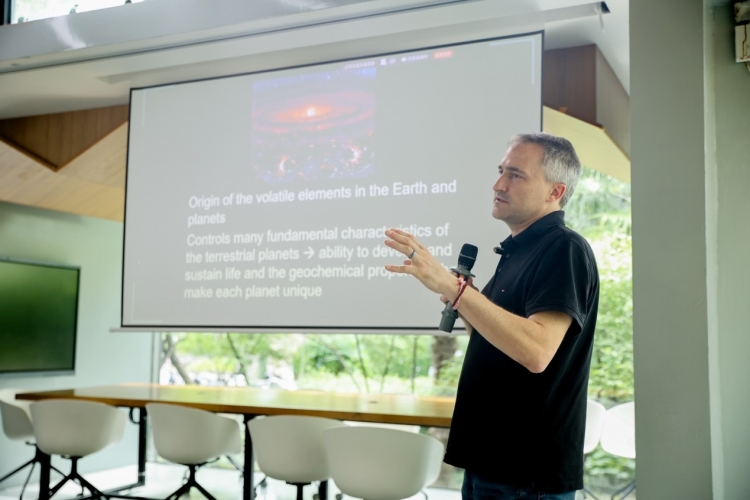
In his presentation, Professor Moynier stated that volatile elements constitute a fundamental prerequisite for terrestrial planets to develop and sustain life. His talk systematically explored the origin of volatiles on Earth and other rocky planets. He demonstrated how high-precision stable isotope measurements of metals (zinc, potassium, mercury, etc.) act as unique "isotopic fingerprints". These fingerprints distinguish volatile loss driven by two distinct processes: volatile depletion caused by early nebular evolution, and evaporative loss accompanying differentiation after planetary formation. Based on isotopic signatures, his team traced the primordial origin of Earth’s volatiles, offering a novel isotopic constraint for understanding solar system evolution and habitable planet formation. The lecture featured rigorous logic and a broad academic vision, presenting groundbreaking advances in the study of solar system volatile origins to all participants.
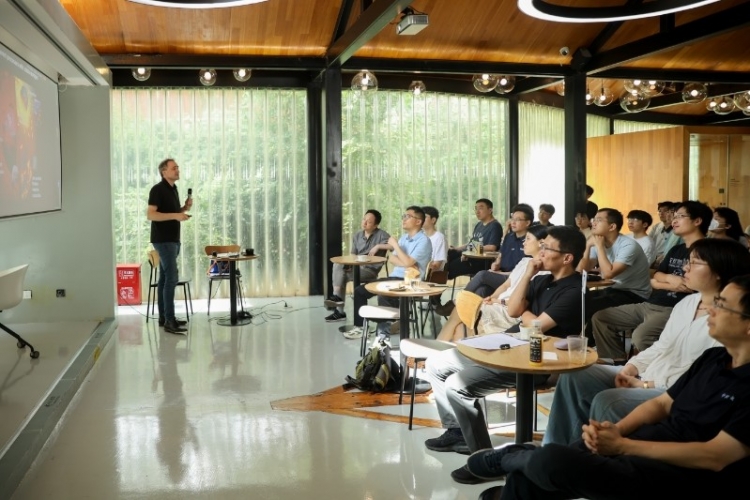
The salon adopted a hybrid format combining on-site participation and online live streaming. A large number of faculty members and researchers attended offline. For nationwide peers and deep-space enthusiasts, the salon was broadcast simultaneously via Tencent Meeting (Meeting ID: 852-729-553, Passcode: 1958) and Koushare Academic Live (Link: https://www.koushare.com/live/details/53962). By press time, the total online view count reached nearly 4,000. The Q&A session after the report was filled with lively discussions. Attendees raised active questions regarding lunar regolith isotope testing, volatile evolution models, and Sino-French collaborative research on lunar samples. Professor Moynier provided thorough, detailed responses to all inquiries, creating a vibrant academic atmosphere and achieving fruitful exchanges both online and offline.
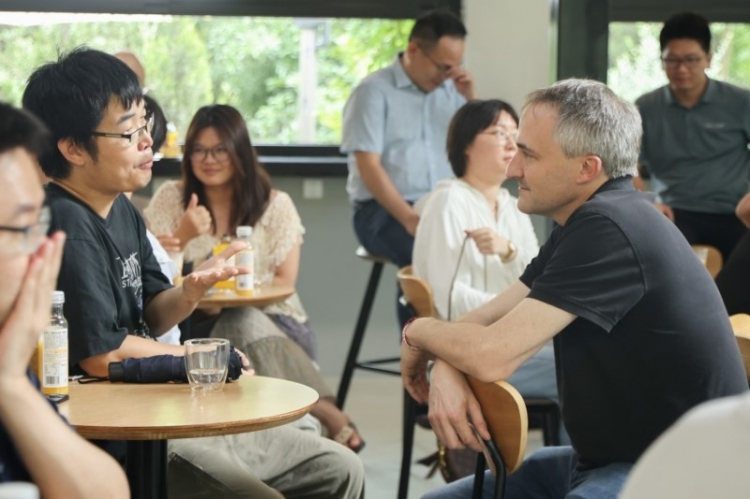
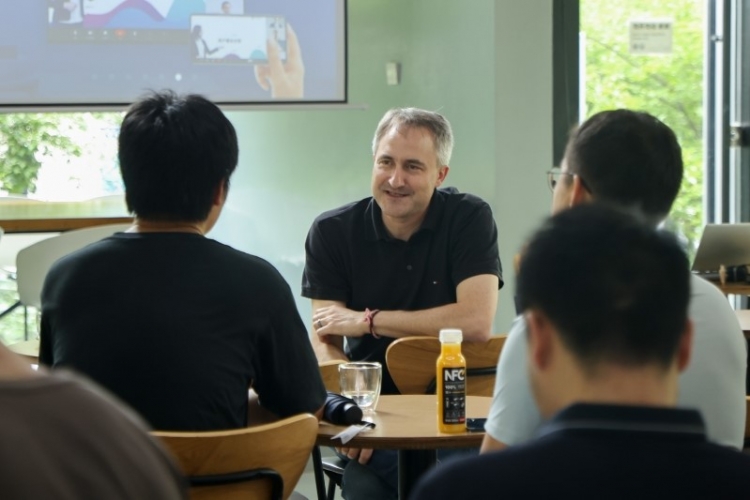
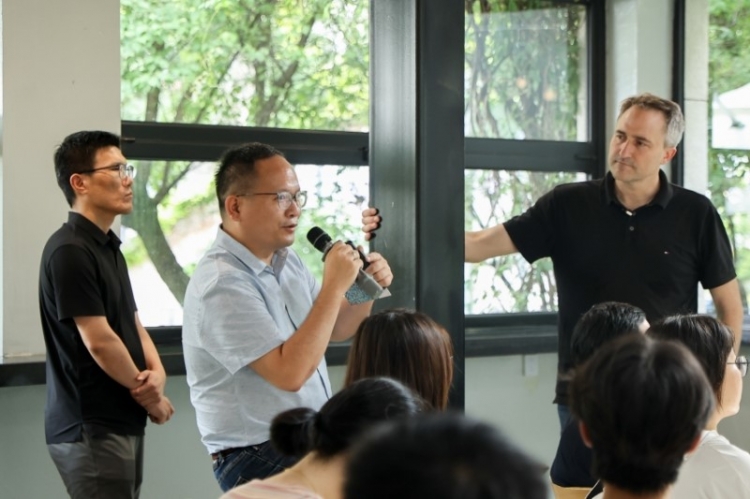
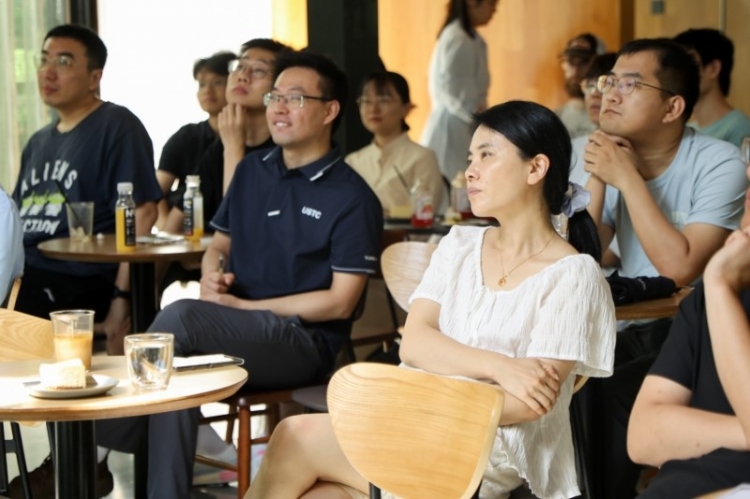
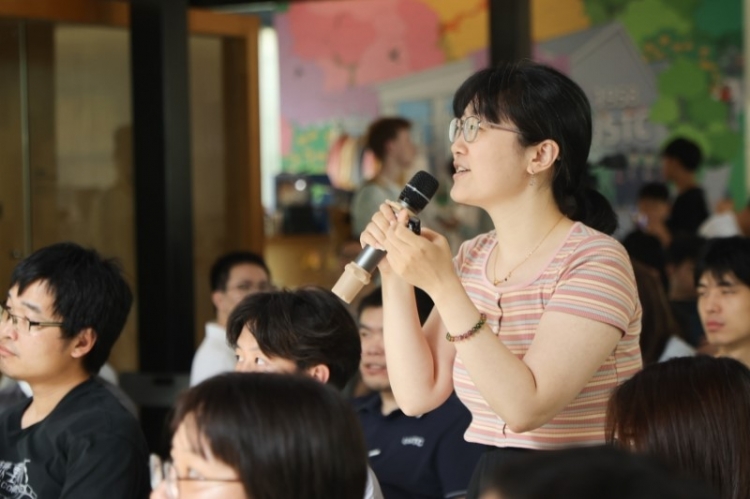
The evolution of volatiles and the origin of planetary materials are core topics for research on solar system evolution and planetary habitability, whose studies carry far-reaching scientific significance for revealing the formation and evolutionary laws of celestial bodies in the solar system. Moving forward, the Tiandu Forum (Deep Space Exploration Academic Salon) will continue to invite distinguished experts and scholars from home and abroad to share cutting-edge research results, and consistently boost the high-quality development of China’s deep space exploration and planetary science undertakings.
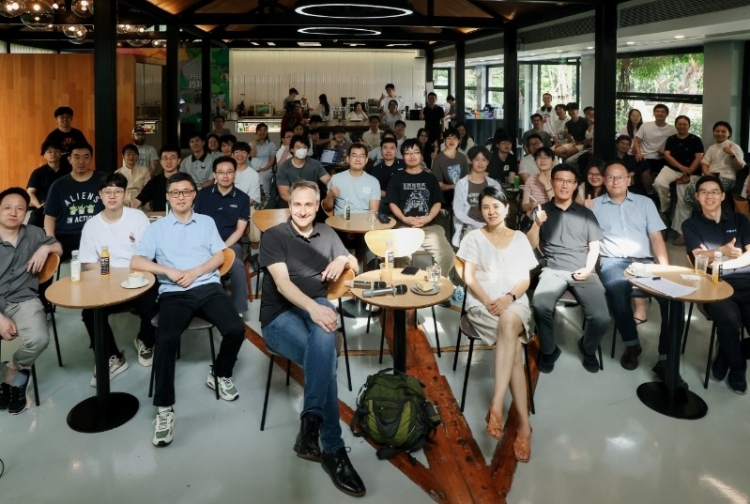
We look forward to meeting more peers and research enthusiasts at future academic events, jointly uncovering the countless mysteries of the universe and journeying toward the sea of stars.
This salon is jointly organized by Deep Space Exploration Laboratory, National Key Laboratory of Deep Space Exploration, and the University of Science and Technology of China, and funded by the USTC Education Foundation.
第47期深空探测学术沙龙:利用金属稳定同位素示踪太阳系挥发份起源
2026年7月9日,第47期天都论坛(深空探测学术沙龙)在中国科学技术大学东区1958咖啡厅成功举办。本次沙龙聚焦金属稳定同位素示踪太阳系挥发份起源这一前沿行星地球化学方向,邀请国际顶尖学者分享原创研究成果,吸引了众多科研工作者以及校内外师生的广泛关注。
本次沙龙特邀法国巴黎西岱大学-巴黎地球物理研究所(IPGP)Frédéric Moynier教授带来专题报告,报告题目为《利用金属稳定同位素示踪太阳系挥发份起源》。Frédéric Moynier教授现任巴黎西岱大学、巴黎地球物理研究所教授、副所长,欧洲科学院院士,是国际地球化学与天体化学领域知名学者。他长期深耕高精度非传统稳定同位素分析技术的开发与应用,研究方向聚焦行星核幔分异、地月系统形成机制以及早期太阳系演化历史等核心科学问题。相关成果大量发表于国际顶级期刊,论文累计引用量超1.8万次;曾长期担任地球科学顶刊《Earth and Planetary Science Letters》主编,斩获多项国际重磅学术奖项,并于2024年当选AGU会士。
Moynier教授与中国学界保持长期深度合作,2023年他作为法方团队核心负责人接收我国嫦娥五号月壤样品,牵头开展系列月球科研工作;同时他与中国科学院多家科研机构搭建起稳定的合作纽带,二十年间指导数十名中国青年科研学者,为推动国际行星科学领域交流合作作出突出贡献。
本次报告中,Moynier教授指出,挥发份是类地行星孕育并维持生命的核心关键要素,本次报告围绕地球及其他岩质行星挥发份的起源问题展开系统探究。他详细展示团队如何利用锌、钾、汞等金属元素高精度稳定同位素测量作为“同位素指纹”,区分两类关键过程:一是早期星云演化造成的元素丢失,二是行星形成后分异伴随的蒸发过程带来的挥发份损耗,基于同位素信号追溯地球挥发份的原生来源,为理解太阳系行星演化、宜居行星形成提供全新同位素约束手段。整场报告逻辑严谨、视野宏大,以前沿同位素技术为抓手,为与会者呈现了太阳系挥发份起源研究领域的突破性进展。
本次沙龙不仅在线下吸引众多师生和科研工作者到场参会,还通过腾讯会议(会议号:852-729-553,会议密码:1958)与蔻享学术直播(链接: https://www.koushare.com/live/details/53962)向全国同行与广大深空科研爱好者开放。截至发稿前,线上浏览量近4000人次。报告结束后的互动问答环节气氛热烈,与会师生围绕月壤同位素测试、挥发份演化模型、中法月球样品合作等问题踊跃提问,Moynier教授细致全面地逐一解答,线上线下学术交流氛围浓厚,研讨成效显著。
挥发份演化、行星物质起源是太阳系演化与行星宜居性研究的核心命题,相关研究对厘清太阳系天体形成、演化规律具备深远科学价值。未来,天都论坛(深空探测学术沙龙)将持续邀请海内外顶尖专家学者分享前沿研究成果,持续助力我国深空探测与行星科学事业高质量发展。
我们期待与各位同行和科研爱好者在未来的学术交流中再次相聚,共同探索宇宙的奥秘,奔赴星辰大海。本次沙龙由深空探测实验室、深空探测全国重点实验室和中国科学技术大学共同举办,并由中国科大教育基金会资助。

Institute of Deep Space Science and Technology